
At the Heart of It
- Stigma and shame reinforce the idea that there is something fundamentally wrong with who we are.
- The LGBTQ+ community is a stigmatized group, and its members commonly experience the effects of stigma and shame, which negatively impact their mental health and wellbeing.
- Coping with shame involves strategies like practicing self-compassion, connecting with trusted others, and expressing pride in yourself and acknowledging your worth.
“It’s just not natural.”
“You don’t look gay.”
“You just haven’t met the right person yet.”
“Hate the sin, love the sinner.”
“You’re only doing this for the attention.”
The history of Pride Month is long, complex, and multi-layered. Its origin as a protest for LGBTQ+ rights intersects with many other minorities’ historical efforts to secure and/or maintain equality and equity for their communities.
But why is it called “Pride” to begin with?
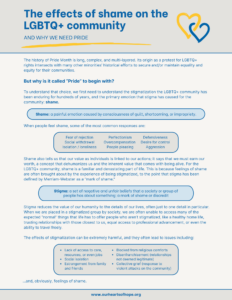
To understand that choice, we first need to understand the stigmatization the LGBTQ+ community has been enduring for hundreds of years, and the primary emotion that stigma has caused for the community: shame.
Shame is defined by Merriam-Webster as “a painful emotion caused by consciousness of guilt, shortcoming, or impropriety.”
If you’ve ever felt it before – and you probably have – you know what it feels like. It’s a sharp, visceral feeling that makes you want to crawl into a shadow and disappear.
But shame is different than guilt and deeper than embarrassment, which are both based on something you’ve done. Shame tells us that we are an embarrassment, that there is something fundamentally wrong or inferior about who we are.
And it takes a real toll on our minds.
When people feel shame, some of the most common responses are:
“In some cases, shame and anticipatory humiliation can lead to depression, anxiety, and even suicide,” writes Dr. Brian Lawlor, M.D., in his article “The harming power of shame” for Cambridge’s British Journal of Psychiatry.
Shame also tells us that our value as individuals is linked to our actions; it says that we must earn our worth, a concept that dehumanizes us and the inherent value that comes with being alive.
For the LGBTQ+ community, shame is a familiar and devastating part of life. This is because feelings of shame are often brought about by the experience of being stigmatized, to the point that stigma has been defined by Merriam-Webster as a “mark of shame.”
Stigma: a set of negative and unfair beliefs that a society or group of people has about something; a mark of shame or discredit
Stigma reduces the value of our humanity to the details of our lives, often just to one detail in particular. When we are placed in a stigmatized group by society, we are often unable to access many of the expected “normal” things that life has to offer people who aren’t stigmatized, like a healthy home life, trusting relationships with those closest to us, equal access to professional advancement, or even the ability to travel freely.
“Sexual minority individuals are more likely than heterosexual individuals to report family rejection and childhood bullying, often directed toward gender nonconforming expressions and mannerisms,” reports John Pachankis, PhD, in his 2024 article titled “The Role of Shame in the Sexual-Orientation Disparity in Mental Health.”
The effects of stigmatization can be extremely harmful, and they often lead to:
…and, obviously, feelings of shame.
Shame is allowed to run rampant when paired with silence and isolation. Clinically recommended strategies for coping with stigma and shame focus heavily on breaking through that isolation, celebrating your inherent, unconditional value as a person, and spending time with those who do not shame you for who you are.
How to combat shame:
“The poison was shame, and the antidote is pride.” L. Craig Schoonmaker
Thus, the movement for LGBTQ+ rights, freedoms, and recognition was given its name, Pride, in answer to the shame imposed on the community for so long.
The late L. Craig Schoonmaker, a lifelong activist who actively participated in the naming of Pride in the 70’s, told the Allusionist in 2015:
“People did not have power then; even now, we only have some. But anyone can have pride in themselves, and that would make them happier as people, and produce the movement likely to produce change.
Have you experienced shame as a result of stigma? If you need someone to talk to, don’t hesitate to reach out: we’re here to help.
Pause for a Beat
- What are some examples of things you’ve heard that shame the LGBTQ+ community?
- For LGBTQ+ readers: Shame can hide in the smallest of corners. Are there things you feel ashamed of, even if you don’t necessarily notice them daily?
- For LGBTQ+ allies: how can you remind your LGBTQ+ family members and friends of their worth, not despite their identity or sexuality, but because of its role in who they are as a person?
Hope and Healing Toolbox
If you or someone you know is a member of the LGBTQ+ community and is in crisis, contact the Trevor Project’s crisis hotline via phone call, text, or chat.
Download a Free Printable PDF of this post: