Ask any parent of an autistic child, and they will tell you: raising a child with autism is one of the most rewarding, eye-opening, and joy-filled experiences life can offer. There are as many reasons to celebrate autism as there are ways that it presents itself. But good things often come in complicated packages, and the journey of living alongside someone with autism is nothing if not complex.
What is Autism?
Autism Spectrum Disorder, or ASD, is a neurodevelopmental condition that often appears in early childhood, though it is possible to be diagnosed well into adulthood. ASD affects social interaction, communication, and behavior, and those with the diagnosis often require complex care and specialized services across the board.
The diagnosis of ASD for a child of any age brings about an entire world of new experiences for parents and family members, and sometimes that can be difficult to process. Feelings of grief, loss, and shock are quite common. This can be due to a multitude of reasons, but some of the challenges parents face might be:
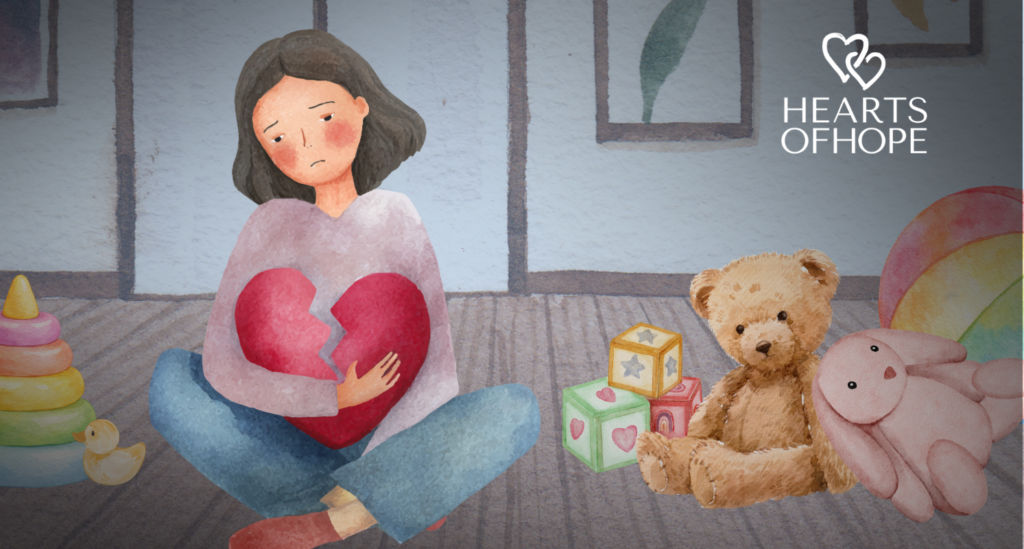
It’s a lot to work through. Still, assigning the words “grief” or “loss” to this situation might feel odd. Autism is not a curse. No one has died. Yet, in an article published in The International Journal of Environmental Research and Public Health, it reports that, “Parents’ grieving reactions to an ASD diagnosis have also been considered to be a type of ‘chronic sorrow’ and ‘non-finite grief’.”
There is a term for this kind of grief: Ambiguous Loss.
Ambiguous Loss: a profound sense of loss and sadness that is not associated with the death of a loved one. It can be a loss of emotional connection when a person’s physical presence remains, or when that emotional connection remains, but a physical connection is lost. (Mayo Clinic)
In the case of parents of autistic children, Ambiguous Loss manifests as “…emotional pain due to the loss of their ideal child and the disruption of their expectations.” As much as someone may try to avoid thinking about how their future child “should” be, parents are only human and are imbued with preexisting expectations for their children’s futures. The loss of that future can feel difficult to accept.
Ambiguous Loss can also come into play when a child with autism is physically present, but psychologically “absent” – i.e., unable to communicate or function socially. It’s never easy to want to connect with someone who isn’t able to reciprocate. When that person is your child, the pain of that lack of connection is something you experience every day. “Families [do] not experience the stages of bereavement only once; rather, they continually [revisit] the different stages again and again…”
With that repetition can also bloom a different kind of challenge: Caregiver Fatigue. It’s something we’ve covered before on our blog, and, though the circumstances are different, the resulting emotional turmoil is often the same.
Caregiver Burnout: Emotional exhaustion, reduced empathy, and physical fatigue as a result of ongoing caregiving. (Kingston Health)
A parent is especially prone to this kind of burnout in their role as their child’s guardian. When a child has specialized needs and increased energy demands, there is no way to avoid the daily responsibilities of caregiving, especially for parents with limited or no external support. The experience can be a high-pressure, endless, and lonely journey.
Parents of autistic children may also experience Compassion Fatigue.
Compassion Fatigue: Reduced ability to empathize with others, even loved ones, due to chronic, repeated demands on one’s time and energy without the ability to replenish.
It’s slightly different from Caregiver Burnout, which is usually the result of long hours of physical effort, heavy workloads, and a lack of support or resources. Rather, Compassion Fatigue is brought on by the emotional demands of caregiving, making it difficult to keep feeling empathy for our children when we feel undersupported in our own needs.
So, what can parents of autistic children do to process these challenges?
An autism diagnosis leads to an incredible, powerful, and unique journey through life. But, as with all change, there is often an element of loss associated with that experience.
Acknowledging that aspect of the autism journey allows us to express our feelings, process them, and, ultimately, move forward into a new and powerful journey with our child with healing, courage, and, most importantly, hope.
Hope and Healing Toolbox
Sources:
Kingston Health, What Are The Stages Of Caregiver Burnout?
Mayo Clinic, Unnamed pain: Coping with ambiguous loss
The Centre for Addiction and Mental Health (CAMH), Compassion Fatigue
The International Journal of Environmental Research and Public Health, Grief Experiences in Family Caregivers of Children with Autism Spectrum Disorder (ASD)