For her kids, it was magic. For her, it was a turning point.
She was the youngest one in the room, and everyone knew it the moment she walked in.
Hearts of Hope’s Moving Forward Bereavement Group met once a week for eight weeks, a small circle of a dozen or so people gathered to talk about loss and the long road afterward. Most of the participants were older. Most were women. Most had lived long lives alongside the people they were grieving.
And then there was her.
She was in her twenties. A young mother with two small children. A widow.
Her husband had died of cancer, and the loneliness and weight of that word—widow—seemed far too heavy for someone her age. She carried it into the room every week. You could see it in the way she sat, the way her hands trembled, the way her eyes filled before she even began to speak. She could never make it through a meeting without breaking down, and no one expected her to.
As fall turned toward winter, the group’s conversations began to shift. Christmas was coming. The attendees talked about their holiday traditions, what they would keep, what they would skip, what hurt too much and what felt comforting. Some spoke about scaling things back. Others admitted they weren’t sure they could face the holidays at all.
When it was her turn, though, she said she was determined to make Christmas happen for her kids. Really happen. A tree. Presents. Decorations. All the magic they had known before. She refused to let grief steal that from them. She had even taken her children shopping so they could buy presents for their dad, even if he wasn’t there to receive them. She wanted to do everything she could to keep their rituals alive as they moved through their grief as a family.
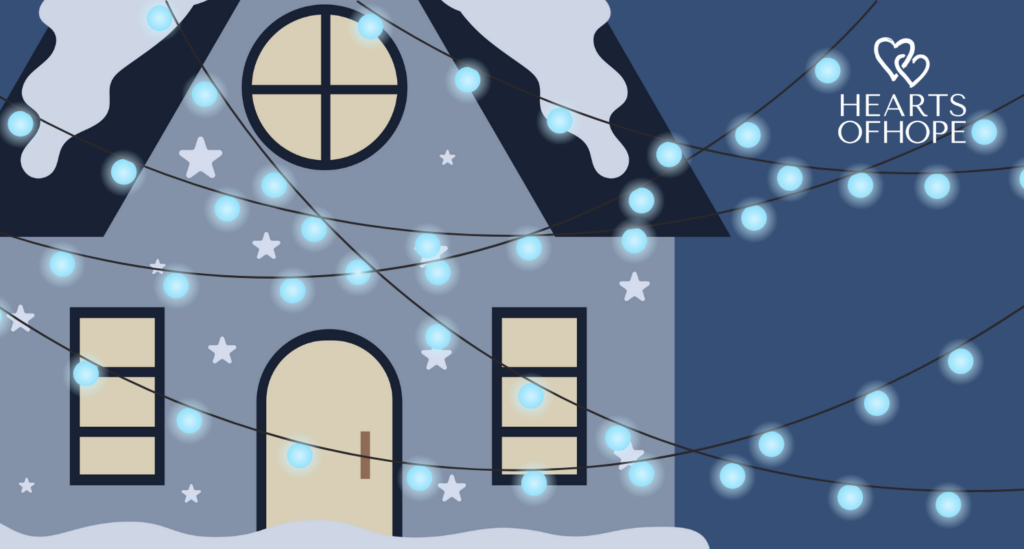
But the one thing she couldn’t quite manage was the lights. It was her husband’s job, every year: he always put up blue Christmas lights all over the outside of their house. Not white lights. Not multicolored strands. He liked blue lights.
This year, though, with everything else on her shoulders, the grief, the parenting, the logistics, the loneliness, she knew she wouldn’t get to the lights. There just wasn’t enough of her left.
But then, one evening right before Christmas, it happened. Once the sun was down and the chores were done, she glanced out of her living room window to find her lawn glowing with light.
Blue light.
Spilled across the house, draped through the trees, lining the porch. Everything was blue. Familiar. Impossible. Beautiful.
Her neighbors and friends had done it. While she was busy surviving, the people in her life had quietly come together. They had installed her husband’s blue lights, honoring his tradition without asking for recognition.
For her kids, it was magic. Something exciting and surprising. Something that looked just like Christmas used to look. Something that said their dad still mattered.
For her, it was a turning point.
The next week, she came into the bereavement group with a new story to tell and, for once, a smile on her face.
That week, she cried less.
The rest of the group cried more.
The blue lights didn’t erase her grief. They didn’t bring her husband back. But they softened the sharpest edge of her loneliness. They told her, without words, that she was not alone. That even though her husband was gone, she didn’t have to carry everything by herself. He was still with her, in memory, in her kids, and in the people who loved them enough to remember what mattered.
Healing doesn’t arrive all at once. Sometimes it comes quietly, strung across a yard in blue lights, reminding us that love doesn’t end when someone is gone.
It just finds new ways to shine.